

On this page
Brisbane, the vibrant capital of Queensland, is renowned for its sunny disposition and outdoor lifestyle. However, beneath the idyllic facade lies a climate that presents a unique challenge for homeowners: scorching, humid summers and surprisingly cool, crisp winters. This dual climatic personality means that maintaining year-round indoor comfort and energy efficiency is not a simple task. While many focus on air conditioning for summer relief, the true hero in Brisbane’s comfort equation often goes unnoticed: **ceiling insulation**. This comprehensive guide delves into why optimising ceiling insulation is paramount for any Brisbane home, exploring the science, material choices, and professional considerations that ensure your home remains a sanctuary, regardless of the weather outside.
Brisbane’s Comfort Equation
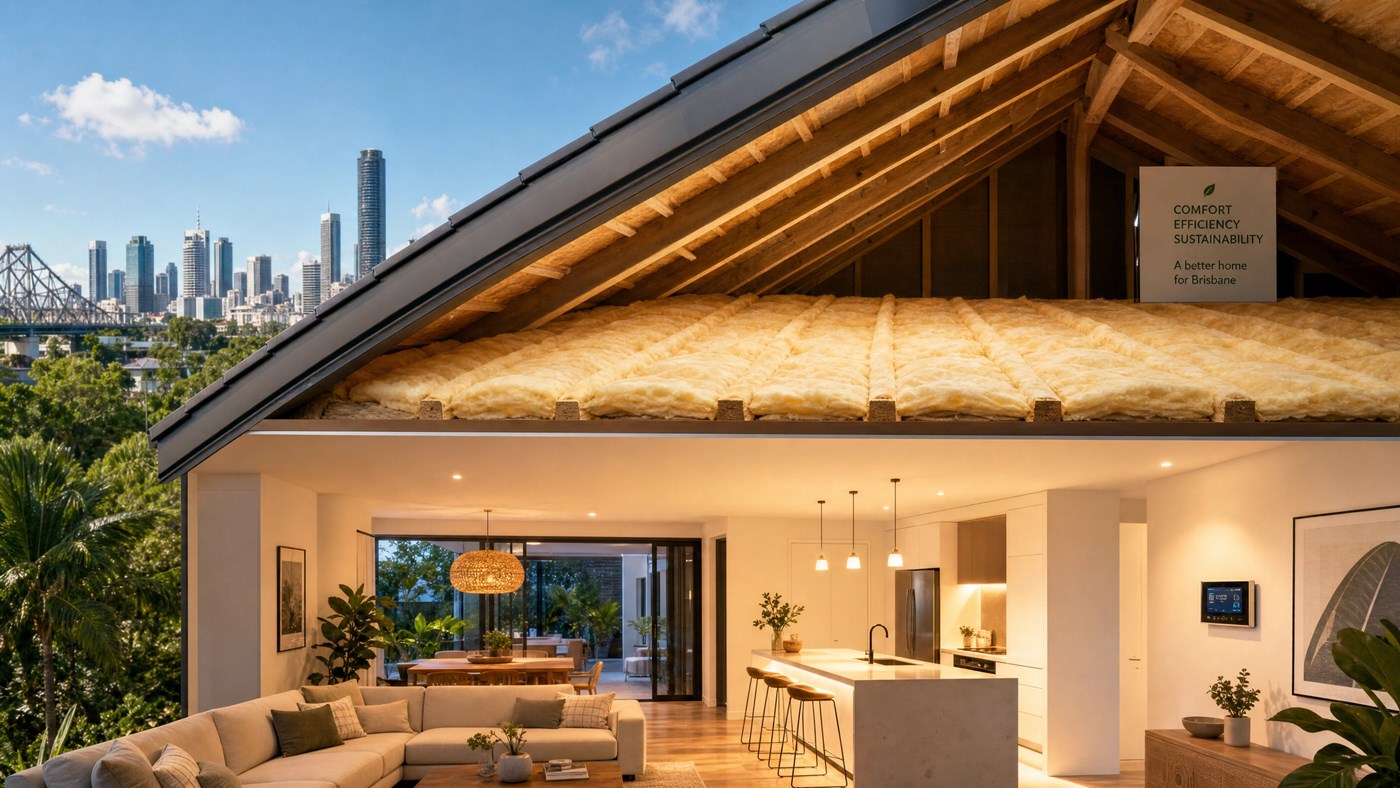
In Brisbane’s dynamic climate, where temperatures can swing dramatically between seasons, effective insulation is not a luxury but a necessity. The ceiling, being the largest surface exposed to direct sunlight and the elements, plays the most critical role in your home’s thermal performance. Without adequate ceiling insulation, your home becomes a thermal sieve, allowing heat to pour in during summer and escape rapidly during winter. This leads to an over-reliance on heating and cooling systems, resulting in exorbitant energy bills and inconsistent indoor temperatures. Optimising your ceiling insulation is therefore the foundational step towards achieving genuine year-round comfort and significant energy savings.
Brisbane’s Climate: A Dual Challenge for Ceilings
Brisbane’s sub-tropical climate, classified as Climate Zone 2 under the National Construction Code (NCC), demands a nuanced approach to insulation. The goal is not just to keep warmth in during winter, but crucially, to keep heat out during the long, hot summer months.
Summer Heat Defence: Battling Radiant Heat
During Brisbane’s summer, the sun’s intense rays beat down on roofs, causing them to heat up significantly. This heat is then radiated downwards into the ceiling cavity and subsequently into your living spaces. Ceiling insulation acts as a vital thermal barrier, dramatically reducing this radiant heat transfer. Without it, your air conditioning system works overtime, struggling to combat the constant influx of heat, leading to higher energy consumption and a less effective cooling experience. A well-insulated ceiling can reduce heat gain by up to 70%, making a tangible difference to your comfort and electricity bills.
Winter Warmth Retention: Holding onto Heat
While Brisbane winters are milder than those further south, temperatures can still drop considerably, especially overnight. Many older Brisbane homes, built without adequate insulation, suffer from rapid heat loss through the ceiling. This means any warmth generated by heaters quickly escapes, forcing heating systems to run longer and harder. Effective ceiling insulation traps this valuable warmth inside, creating a more stable and comfortable indoor environment and reducing your reliance on supplementary heating.

The Science of R-Values: What Brisbane Needs
The effectiveness of insulation is measured by its R-value, which denotes its thermal resistance – its ability to resist heat flow. A higher R-value indicates greater insulating power. For Brisbane homes, selecting the correct R-value is paramount to achieving optimal thermal performance.
NCC Requirements for Brisbane (Climate Zone 2)
The National Construction Code (NCC) sets minimum R-value requirements for different building elements based on Australia’s climate zones. Brisbane falls within Climate Zone 2, which has specific minimums designed to ensure a baseline level of energy efficiency. While these minimums are a starting point, they often represent the bare legal requirement, not necessarily the optimal level for maximum comfort and energy savings.
Optimal R-Values for Superior Performance
For Brisbane ceilings, Express Insulation generally recommends exceeding the minimum NCC requirements to achieve superior year-round comfort and maximise energy savings. While the minimum might be around R3.0, aiming for an R-value between **R4.0 and R6.0** provides a significantly better thermal envelope. This higher R-value range offers enhanced protection against both intense summer heat gain and winter heat loss, leading to a more stable indoor temperature and reduced reliance on HVAC systems.
| Application | NCC Minimum R-Value | Express Insulation Optimal R-Value |
|---|---|---|
| New Builds (Ceiling) | R3.0 | R4.0 – R6.0 |
| Existing Homes (Upgrade) | N/A (no minimum for existing, but upgrades recommended) | R4.0 – R6.0 (or adding to existing to reach this total) |
It’s important to note that while higher R-values offer better performance, there are diminishing returns beyond a certain point. Our experts can help you determine the most cost-effective R-value for your specific home and budget.
Choosing the Right Ceiling Insulation Material
The market offers a variety of insulation materials, each with its own characteristics. For Brisbane’s climate, the choice often comes down to a balance of thermal performance, moisture resistance, and suitability for the ceiling space.
Insulation Batts (Glasswool, Polyester, Rockwool)
Batts are the most common form of insulation, available in pre-cut sections designed to fit between ceiling joists. They are excellent at resisting conductive and convective heat flow.
- **Glasswool Batts:** Made from recycled glass, highly effective, fire-resistant, and available in a wide range of R-values. A popular choice for Brisbane ceilings due to its thermal performance and cost-effectiveness.
- **Polyester Batts:** Made from recycled plastic bottles, hypoallergenic, and often chosen for allergy sufferers. Offers good thermal performance and is easy to handle.
- **Rockwool Batts:** Made from volcanic rock, offering superior fire resistance and acoustic properties, in addition to excellent thermal performance.
Loose-Fill Insulation (Blown-in Cellulose or Glasswool)
Loose-fill insulation is blown into the ceiling cavity, conforming to irregular spaces and filling gaps around obstacles. This makes it ideal for existing homes with complex roof structures or hard-to-reach areas.
- **Cellulose Fibre:** Made from recycled paper treated for fire and pest resistance. Offers good thermal performance and excellent gap-filling capabilities.
- **Blown-in Glasswool:** Similar to batts but in a loose form, offering good thermal performance and the ability to fill cavities uniformly.
Reflective Foil Insulation (Sarking)
Often installed under roof tiles or metal roofing, reflective foil insulation (sarking) is highly effective at reflecting radiant heat. In Brisbane’s sunny climate, where radiant heat gain is significant, sarking acts as a crucial first line of defence.
- **How it Works:** It creates a barrier that reflects up to 95% of radiant heat, preventing it from entering the roof cavity. It also acts as a secondary layer of protection against moisture and dust ingress.
- **Best Use:** Ideal for complementing bulk insulation (batts or loose-fill) by tackling radiant heat, which bulk insulation alone is less effective against.
| Material Type | Pros | Cons | Brisbane Suitability |
|---|---|---|---|
| Insulation Batts (Glasswool, Polyester, Rockwool) | Excellent thermal performance, wide R-value range, fire-resistant (Glasswool/Rockwool) | Can be bulky, requires precise cutting, less effective against radiant heat alone | Highly suitable for thermal resistance, especially when combined with sarking |
| Loose-Fill (Cellulose, Blown-in Glasswool) | Conforms to irregular spaces, good for existing homes, fills gaps effectively | Can settle over time, requires specialised equipment for installation | Excellent for hard-to-reach areas and achieving uniform coverage in existing ceilings |
| Reflective Foil (Sarking) | Highly effective against radiant heat, acts as a vapour barrier, secondary weather protection | Low R-value against conductive/convective heat, requires an air gap to be effective | Essential for combating radiant heat gain in Brisbane’s hot summers, complements bulk insulation |
Beyond Batts: Integrated Strategies for Brisbane Ceilings
While insulation is paramount, achieving optimal comfort in Brisbane often requires an integrated approach that considers other elements of your roof and ceiling space.
Effective Roof Ventilation
A well-ventilated roof space is crucial in Brisbane. Hot air trapped in the roof cavity can significantly increase the heat load on your ceiling insulation. Strategies like whirlybirds, roof vents, or passive ventilation systems help to expel this superheated air, reducing the temperature in the ceiling space and allowing your insulation to perform more effectively. This also helps in managing moisture, preventing condensation build-up.
Air Sealing: Preventing Leaks and Humidity Ingress
Insulation works best when combined with effective air sealing. Gaps and cracks around light fittings, exhaust fans, ceiling roses, and access hatches can allow conditioned air to escape and unconditioned, humid Brisbane air to infiltrate. Sealing these leaks with appropriate sealants, tapes, or covers prevents thermal bypass and ensures your insulation performs at its peak, while also reducing humidity ingress.
External Shading
While not directly part of ceiling insulation, external shading elements like wide eaves, pergolas, and shade sails can significantly reduce the amount of direct sunlight hitting your roof. This reduces the initial heat load, making the job of your ceiling insulation easier and further enhancing indoor comfort.
Professional Installation: The Brisbane Advantage
Given Brisbane’s challenging climate and the complexities of building codes, professional installation of ceiling insulation offers distinct advantages over a DIY approach.
Conclusion: The Smart Choice for Brisbane Homes
For Brisbane homeowners, optimising ceiling insulation is the cornerstone of a comfortable, energy-efficient, and sustainable home. It’s an investment that pays dividends year-round, shielding your living spaces from the harsh summer sun and retaining warmth during cooler winters. By understanding the science of R-values, selecting the right materials, and integrating effective ventilation and air sealing strategies, you can transform your home’s thermal performance. Ultimately, entrusting this crucial task to professional installers ensures compliance, safety, and a perfectly executed solution tailored to Brisbane’s unique climate, delivering lasting comfort and significant savings.
Leave a Reply