


On this page
As environmental awareness grows across Australia, modern home builders and renovators are looking beyond mere energy efficiency numbers to examine the lifecycle impact of the materials they put inside their walls. Insulation is no exception. Traditional building products often relied on petroleum-based binders or chemical additives that compromised indoor air quality during and after installation. Today, sustainable insulation leaders like Knauf Earthwool and high-grade recycled polyester are redefining the market. This guide explores the science, performance, and environmental benefits of eco-friendly insulation choices for Queensland properties.
The Shift Toward Sustainable Building Materials in Australia
The Australian construction sector is undergoing a profound cultural shift. Driven by rating systems like the Green Star framework managed by the Green Building Council of Australia and consumer demand for healthier living spaces, architects and builders are scrutinising embodied carbon, resource recovery, and chemical safety.
When evaluating insulation batts, materials, R-values, and applications, sustainability is no longer an optional extra—it is a core design parameter. In subtropical Queensland, where homes are tightly sealed to retain air-conditioned air, the materials inside your ceiling and wall cavities directly influence the air your family breathes every day.
Earthwool Glasswool and ECOSE Technology
Manufactured by Knauf Insulation, Earthwool has become a cornerstone of sustainable building across Australia. Unlike traditional glasswool—which relied on petroleum-derived phenol-formaldehyde binders—Earthwool utilises ECOSE Technology, a revolutionary bio-based binder made from rapidly renewable organic materials.
This innovation eliminates petroleum-based chemicals, reduces embodied energy during production, and results in a tactilely softer, odour-free batt that is significantly easier to handle. For homeowners seeking the best insulation solutions combining thermal performance with ecological responsibility, Earthwool represents a benchmark product.
Recycled Polyester (PET): Circular Economy in Action
Another premier sustainable choice is polyester insulation, manufactured from recycled polyethylene terephthalate (PET) plastic bottles. Diverting millions of plastic containers from Australian landfill each year, polyester batts represent a true circular economy success story.
Polyester insulation is completely non-irritating, contains no harmful resins, and does not require protective clothing during installation—though professional insulation installers are still recommended to ensure optimal fit and thermal bridging prevention. It is exceptionally durable, moisture-resistant, and ideal for humid Queensland environments.
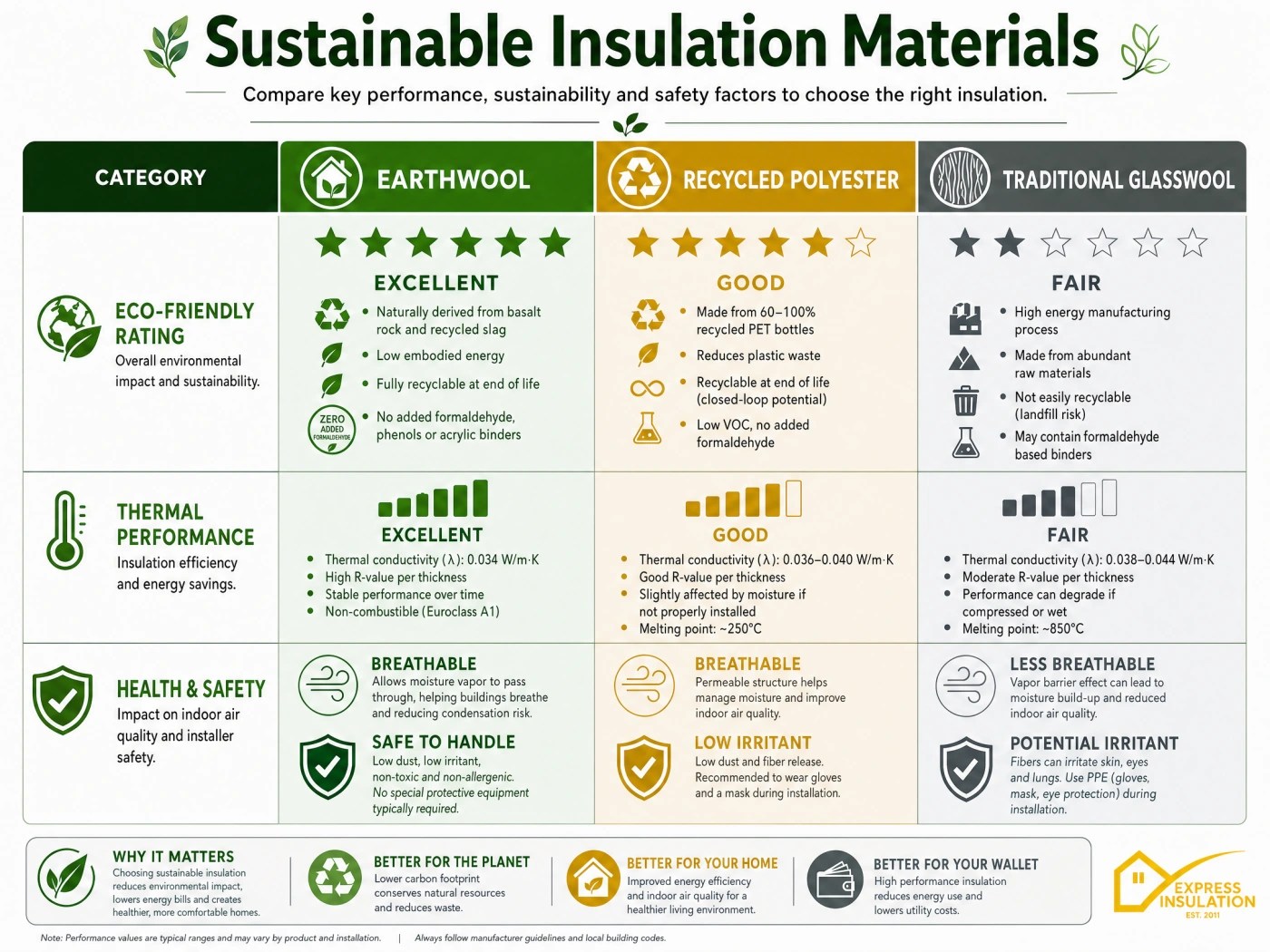
Comparative Environmental and Thermal Performance
Evaluating eco-friendly insulation requires balancing thermal resistance (R-value) against environmental credentials. Understanding R-values in Australian homes ensures your sustainable choice meets NCC thermal targets.
| Material | Recycled Content | Binder Type | Moisture Behaviour | Acoustic Rating |
|---|---|---|---|---|
| Earthwool Glasswool | Up to 80% glass cullet | ECOSE Bio-based | Vapour permeable | Excellent |
| Recycled Polyester | Up to 80% post-consumer PET | Thermal bond (no resins) | Hydrophobic (repels water) | Very Good |
| Cellulose Fibre | Up to 85% recycled paper | Borate treatment | Managed absorption | Good |
| Sheep’s Wool | 100% natural renewable | Natural protein bond | Moisture buffer | Very Good |
Indoor Air Quality and VOC Emissions in Tight Homes
As homes achieve higher energy ratings under NCC 2022, they become tighter and less prone to natural air leakage. While this saves energy, it places immense responsibility on building materials to maintain healthy indoor air. Volatile organic compounds (VOCs) off-gassing from paints, adhesives, and traditional building products can accumulate in sealed indoor environments.
Both Earthwool and high-grade polyester carry low-VOC certifications (such as Eurofins Indoor Air Comfort Gold), ensuring zero harmful chemical emissions. This is particularly vital in hot and humid climates where air conditioning recirculates indoor air for months at a time.
Selecting the Right Eco-Friendly Solution for Your Build
Choosing sustainable insulation involves a step-by-step evaluation of project goals:
-
Assess Thermal Requirements Determine required R-values for ceiling, walls, and floor based on your climate zone and NatHERS report.
-
Evaluate Environmental Priorities Decide whether recycled content, bio-based binders, or local sourcing is your primary green metric.
-
Check Health and Allergy Certifications Verify VOC ratings and Green Star compliance documentation for occupant peace of mind.
-
Engage Specialist Installers Partner with Express Insulation to ensure eco-friendly batts are installed without gaps or compression.
Leave a Reply